
Stop listening to reviewers who spend twenty minutes waxing poetic about “atmospheric tension” and “cinematic lighting” before they even mention the gameplay. I’ve spent enough late nights staring at a screen, heart hammering against my ribs, to know that a pretty fog effect doesn’t make a game scary—it just makes it hard to see the enemy telegraphing their attack. Most people don’t actually know how to judge a horror game fairly; they just get swept up in the marketing hype or the aesthetic. If a game relies on a scripted jump scare every ten minutes to keep you engaged, it isn’t “masterful horror,” it’s just cheaply programmed.
I’m not here to give you a lecture on ludonarrative dissonance or whatever other academic nonsense you’ll find on a major gaming site. I want to talk about the mechanics that actually matter: whether the resource management feels punishing or just tedious, if the enemy AI is actually unpredictable, and if the dread is built into the systems rather than just the soundtrack. I’m going to show you how to look past the trailer and figure out if a game is actually worth your limited time or if it’s just a glorified walking simulator with a loud noise problem.
Table of Contents
Evaluating Jump Scare Effectiveness Over Cheap Cheap Thrills
Most horror games treat jump scares like a cheap way to spike your heart rate when the actual gameplay gets boring. If a monster just pops out of a corner with a loud bang every ten minutes, that’s not scary; it’s just an annoying audio cue that tells you to check your settings. I’m looking for tension and release cycles that actually work. A good scare should feel like the inevitable result of a mistake you made five minutes ago, not a random script trigger designed to startle a casual player.
You have to look at the sound design in horror games to see if they’re actually trying. If the audio is just a constant, muddy drone, they’re hiding a lack of substance. I want to hear the floorboard creak specifically when I’m mid-sprint, or a distant sound that makes me question if I actually saw something or if my brain is just filling in the gaps. If the game relies on a loud “sting” to do the heavy lifting, it’s failing. Real fear comes from the dread of what might happen, not the predictable noise of what just did.
Mastering the Tension and Release Cycles
Most horror games fail because they don’t understand the math of dread. They keep the pressure at a constant ten, which is a mistake; if everything is terrifying, nothing is. To judge a game properly, you need to look at how it manages its tension and release cycles. A good game knows when to let you breathe—not just to give you a break, but to let the silence settle so the next threat actually lands. If the game lacks these valleys, the peaks become white noise.
I look specifically at how the sound design in horror games facilitates this. It shouldn’t just be loud bangs. I’m looking for the subtle shifts—the way the ambient track thins out right before a scripted event, or how the footsteps behind you aren’t actually there, but the audio engine makes you think they are. If the game relies entirely on visual cues to signal danger, it’s lazy. A well-constructed loop uses environmental cues to build a sense of impending doom, then pulls the rug out just when you think you’ve found a safe room.
Stop Looking at the Trailer and Start Looking at the Mechanics
- Ignore the cinematic cutscenes. I don’t care how much a developer spent on motion capture if the actual gameplay loop is just walking down a hallway for twenty minutes. Judge the game by how it feels when you actually have the controller in your hands, not by the hype-filled montage on YouTube.
- Check if the difficulty is a skill wall or a math wall. A fair horror game challenges your reaction time or your ability to manage resources; it shouldn’t just force you to grind for a specific weapon because the enemy’s HP pool is mathematically impossible to deplete otherwise.
- Test the input latency and camera movement. In a horror game, if the camera feels floaty or there’s a half-second delay between your movement and the character’s response, the “fear” is actually just frustration. If you can’t control your character precisely, you aren’t playing a horror game; you’re playing a broken one.
- Look for pattern-based dread rather than RNG. A good horror encounter has a logic you can learn. If you die because a monster spawned behind you through a scripted trigger that ignores your positioning, that’s bad design. If you die because you failed to read a specific animation cue, that’s a fair fight.
- Evaluate the resource economy, not the scarcity. It’s not about having “no ammo”; it’s about whether the game gives you enough information to make a decision. If I have three bullets left, I need to know if the next room is a sprint or a tactical retreat. Scarcity without information is just a chore.
The Bottom Line
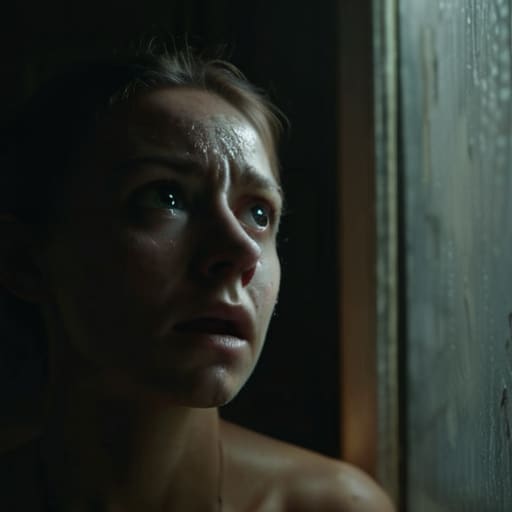
If a scare relies entirely on a loud audio cue or a sudden camera jerk without any buildup, it’s a cheap mechanic, not a horror element.
A good horror game needs a rhythm; if the tension stays at 100% for the entire session, you’ll get desensitized and stop feeling anything.
Stop looking at the graphics and start looking at the pacing—fear is a product of what the game lets you see, not how many polygons are in the dark.
The Bottom Line
At the end of the day, stop looking at the production value and start looking at the mechanics. If a game relies on a loud noise to make you jump because it can’t sustain a sense of dread through its pacing, it has failed. A fair judgment means separating the cheap sensory overload from actual, well-constructed tension. You need to weigh whether the game respects your time by providing learnable patterns and meaningful atmosphere, or if it’s just trying to hide a shallow experience behind a dark hallway and a high-decibel screech. If the tension doesn’t have a rhythm, it isn’t horror; it’s just noise.
Don’t let the marketing hype or the “scariest game of the year” labels dictate your experience. My goal isn’t to tell you if a game is “good” in a vacuum, but whether it actually functions as the machine it claims to be. Use these metrics to find the games that actually haunt your thoughts long after you’ve turned the console off, rather than the ones that just make you twitch for five seconds. Look for the substance beneath the scares, because a truly great horror game doesn’t just startle you—it stays in your head while you’re trying to sleep.