
Stop listening to the “pro” streamers who tell you that you need a specific tier-five mount or a three-hour ritual just to clear a single zone. It’s a lie designed to make the grind look like a lifestyle instead of a chore. I spent my first fifty hours in my last RPG running in useless circles because I followed a guide that claimed I needed to optimize my rotation for “passive collection,” only to realize I was just wasting my life on mechanics that didn’t even trigger. If you want to learn how to gather materials efficiently, you need to stop chasing the hype-train meta and start looking at the actual math of the drop rates.
I’m not here to give you a flowery walkthrough or a list of “fun” activities that secretly eat your time. I’m going to show you the exact routes, the specific spawn timers, and the minimalist setups that actually move the needle. I’ve spent way too many hours staring at spreadsheets so you don’t have to. This is about cutting the fat and getting you back to the actual gameplay without hitting a resource wall that makes you want to uninstall.
Table of Contents
Identifying Optimal Farming Paths Over Useless Scenic Routes
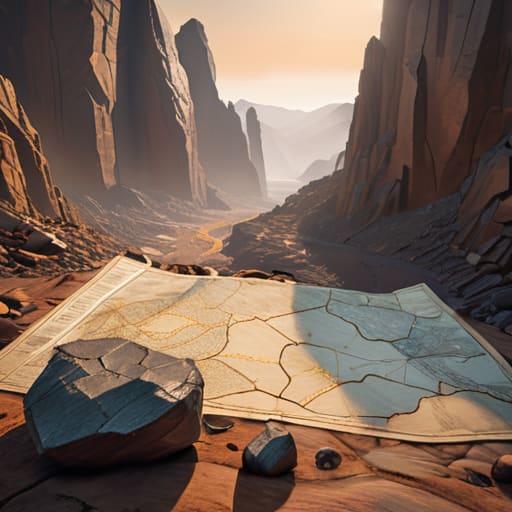
Most games try to hide their actual loot behind “scenic” vistas and long, winding paths that serve no purpose other than padding the playtime. If you find yourself sprinting through a forest for ten minutes just to hit a single ore vein, the devs are wasting your time. You need to stop looking at the landscape and start looking at resource node density. I spent three hours mapping out the zone in Aethelgard last week, and the difference was night and day: there is a specific loop through the northern ridge that hits six nodes in under four minutes, whereas the “main path” everyone follows only gives you two.
Stop following the quest markers if they lead you into low-yield territory. I track my routes in a spreadsheet because seeing the math makes it obvious when a path is a dead end. Your goal is minimizing travel time between high-value spawns. If you aren’t memorizing the exact turn-by-turn movement required to hit every node in a circuit, you aren’t farming; you’re just wandering. If the route doesn’t feel like a timed run, it’s probably a waste of your life.
Maximizing Resource Node Density Without Hitting a Wall
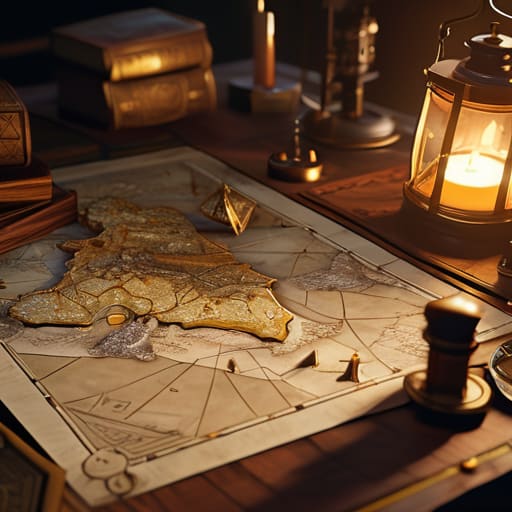
Most players fall into the trap of chasing the highest-tier loot immediately, ignoring the math of resource node density. You end up sprinting across the map for a single rare drop while ignoring three clusters of mid-tier nodes that could have filled your bags in half the time. If you aren’t looking at the spawn timers and the physical distance between nodes, you aren’t farming; you’re just exercising. I stopped playing by the map markers and started playing by the clock. I track exactly how long it takes for a zone to reset, and if the travel time between nodes exceeds thirty seconds, that loop is dead to me.
The real killer isn’t the spawn rate, though; it’s your own inventory management strategies. There is nothing more soul-crushing than hitting a node, seeing exactly what you need, and realizing you have to drop a stack of iron just to pick it up. Stop running back to town every ten minutes. If you aren’t using consumables to expand your carry weight or prioritizing specific loot tables to minimize travel time, you’re effectively playing on hard mode for no reason. Map out a loop where every single stop is a guaranteed fill, not a gamble.
Stop playing pretend: 5 ways to actually optimize your loops
- Stop chasing the “rare” spawns. If a node has a 2% drop rate but takes ten minutes to travel to, it’s a trap. Stick to the 20% drop rate nodes that sit right on your pathing. I’d rather have ten guaranteed drops than spend an hour staring at a loot table waiting for a miracle.
- Check your inventory weight every single loop. There is nothing more soul-crushing than finishing a perfect farming run only to realize you can’t move because you picked up three extra pounds of useless ore. If it isn’t on your core crafting list, don’t touch it.
- Use consumables to buff your yield, not just your stats. Most players stack attack power because they’re impatient, but if the game has a “luck” or “gathering” buff, use it. It’s a marginal gain per node, but over a three-hour session, it’s the difference between a finished craft and a half-empty bar.
- Map your reset timers. If a resource node respawns every five minutes, don’t stand there waiting for the animation to finish. Move to the next point in your circuit immediately. I have a spreadsheet for my rotation timing; you don’t need one, but you do need to stop idling.
- Ignore the “optimal” gear if it slows your movement. I’ve seen people run heavy armor sets for the defense stats while farming, but the movement penalty kills their efficiency. Speed is the only stat that matters when you’re trying to beat a grind.
The bottom line
Stop wandering. If a route doesn’t hit at least three high-yield nodes in under ninety seconds, it’s a waste of your time.
Map the density, not the scenery. I don’t care if the forest looks good; if the spawn timer is longer than the travel time, move to the next zone.
Respect the wall. If the drop rate is mathematically broken, stop grinding and go check if you missed a prerequisite buff or a specific gear modifier.
Stop playing against the clock
Look, if you’ve actually applied what I’ve laid out, you should stop seeing resource gathering as a chore and start seeing it as a math problem. You’ve identified which paths actually yield high-density nodes and which ones are just wasted movement, and you’ve stopped letting the game’s intended “scenic” pacing dictate your progress. It’s not about playing more hours; it’s about making sure the hours you actually put in aren’t being burned on low-yield loops. If you find yourself running in circles without a specific node density target in mind, you aren’t playing the game—you’re just letting the game play you.
At the end of the day, the goal isn’t to become a professional farmer; it’s to get the materials so you can actually get back to the part of the game that matters. Whether that’s a boss fight, a PvP match, or just seeing the next bit of story, the grind should be a tool, not a permanent roadblock. Don’t let a poorly designed loot table turn your hobby into a second job. Optimize the hell out of your routes, keep your settings tight, and get back to the actual gameplay. You didn’t log on to watch numbers tick up; you logged on to win.