
Stop listening to reviewers who drone on about “sonic immersion” or “orchestral depth” like they’re describing a museum exhibit. I don’t care if the soundtrack is a masterpiece if it’s masking the actual gameplay. Most people have no idea how to judge sound design because they’re looking at the art instead of the utility. I’ve spent too many hours in high-stakes ranked matches dying because a heavy attack sound effect was buried under a generic explosion, or because the directional audio was so muddy I couldn’t tell if a flanker was left or right. If a sound doesn’t give you actionable information, it’s just expensive noise.
I’m not here to give you a lecture on frequency ranges or acoustic physics. I’m going to show you how to strip away the hype and look at what actually matters: information density and clarity. We’re going to talk about whether a sound cue tells you exactly when to dodge, if the audio feedback loop actually rewards your inputs, and how to spot a mix that’s actively working against you. No fluff, no pretension—just the metrics that actually help you play better.
Table of Contents
Is the Frequency Balance Helping or Just Hurting Your Ears

Most people talk about “immersion” like it’s some magical aura, but half the time, they’re just being drowned out by a muddy mess. If you’re playing a competitive shooter and the heavy bass from a nearby explosion completely masks the footsteps of a player flanking you, the sound design has failed. I don’t care how cinematic the explosion felt; if it broke my situational awareness, it’s bad. You need to look at the frequency balance in sound design to see if the developers actually prioritized gameplay over sheer volume.
A good mix ensures that every layer has its own space. I use a basic sonic texture analysis when I’m testing new gear: I listen for whether the high-end clicks of a reload or the mid-range hum of a spell are getting swallowed by the low-end rumble. If the audio feels like a wall of white noise where everything is fighting for dominance, it’s just fatiguing your brain. You shouldn’t have to turn your master volume down to zero just to hear a subtle cue.
Using Sonic Texture Analysis to Spot Lazy Asset Reuse
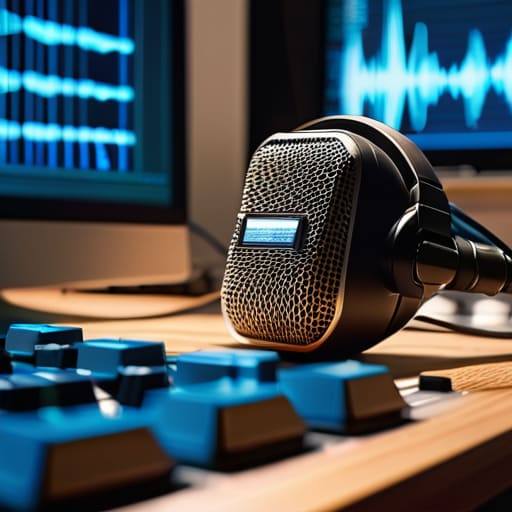
If you’ve played more than three AAA titles in the last five years, you’ve already heard the “lazy asset” fatigue. You know the feeling: you’re walking through a forest in one game, then a different forest in another, and the crunch of the leaves under your boots sounds identical. When I perform a quick sonic texture analysis while playing, I’m not looking for “vibes.” I’m looking for the repetition of specific waveform signatures. If the impact sound of a heavy sword hitting a shield is the exact same sample used for a footstep on stone, the illusion is dead.
Lazy developers rely on these recycled loops because they’re cheap, but it breaks your focus. High-quality soundscapes use layered, non-identical assets to create depth. I want to hear the micro-variations in a reload animation—the slight metallic scrape that changes depending on how much ammo is left. If every interaction feels like it’s coming from the same digital bucket, the developers didn’t invest in soundscape immersion factors; they just bought a generic asset pack and called it a day.
Stop listening to the music and start listening to the feedback
- Check if the sound cues actually tell you when to dodge. If you’re getting hit by a heavy attack and the sound cue came half a second too late or was buried under a generic explosion, the sound design is a failure, regardless of how “atmospheric” the soundtrack is.
- Look for the “audio clutter” threshold. If you’re in a heavy combat encounter and you can’t distinguish your own character’s reload sound or a low-health ping from the ambient background noise, the mix is garbage and it’s going to cost you matches.
- Test the spatial consistency. I don’t care if the game claims to be “3D audio”; if I can’t pinpoint exactly which direction a footstep is coming from during a tense moment, the directional implementation is just window dressing.
- Identify the “one-note” loop. If every single explosion or sword clink sounds like the exact same asset being pitched up or down slightly, the developers were lazy. Real sound design uses distinct textures so your brain doesn’t tune out the important cues.
- Evaluate the UI’s functional utility. A good UI sound shouldn’t just be “satisfying” to click; it should provide immediate, non-verbal confirmation of an action. If you have to look at the screen to confirm a menu selection worked because the sound was too subtle, the design failed.
The Bottom Line
If you can’t distinguish a footstep from a reload because the mid-range is a muddy mess, the sound design has failed its primary job.
Stop listening for “atmosphere” and start listening for information; if a sound doesn’t provide a mechanical cue for an action, it’s just filler.
Watch for the pattern—if you hear the same three impact sounds every time you hit an enemy, the devs took a shortcut and you’re playing a repetitive loop, not a living world.
Stop Listening to the Hype
At the end of the day, judging sound design isn’t about whether the orchestra sounds “epic” or if the ambient wind is “immersive.” It’s about utility. If you can’t distinguish a reload animation from a footstep because the frequency balance is a muddy mess, the sound design has failed you. If you realize the “new” monster encounter is just the same three assets pitched down an octave, you’ve spotted lazy reuse. Stop letting marketing teams tell you a game is “sonically breathtaking” and start asking if the audio cues are actually providing actionable data during a high-stakes fight. If the sound doesn’t help you play better, it’s just expensive noise.
I spent way too many hours in ranked lobbies dying to patterns I should have seen coming, all because the audio cues were buried under a layer of cinematic bloat. Don’t make that mistake. When you sit down to play something new, ignore the reviews and listen for the mechanical truth of the game. Does the audio respect your time and your skill, or is it just trying to distract you from a broken loop? Once you start looking for the actual substance beneath the layers, you’ll realize that the best sound design isn’t the loudest—it’s the one that actually makes sense when the pressure is on.