

Most “pro” guides tell you that you need a high-end setup or a dozen different peripheral settings to see results, but they’re mostly just selling noise. I spent my first hundred hours in ranked thinking that if I just played more matches, I’d get better, only to realize I was just hard-coding my own mistakes into my muscle memory. If you don’t actually know how to practise in training mode with a specific intent, you aren’t getting better; you’re just beating the controller into submission while your rank stays stagnant.
I’m not here to give you a motivational speech or tell you to “believe in yourself.” I’m going to show you how to actually deconstruct a fight by isolating frame data, testing specific reaction windows, and drilling the exact inputs that matter. This isn’t about mindless repetition; it’s about purposeful mechanical breakdown. I’ve spent thousands of hours in these menus so you don’t have to waste months hitting a wall, and I’m going to give you the exact drills that actually translate to a win in a real match.
Table of Contents
Deliberate Practice Methods for Breaking Skill Walls
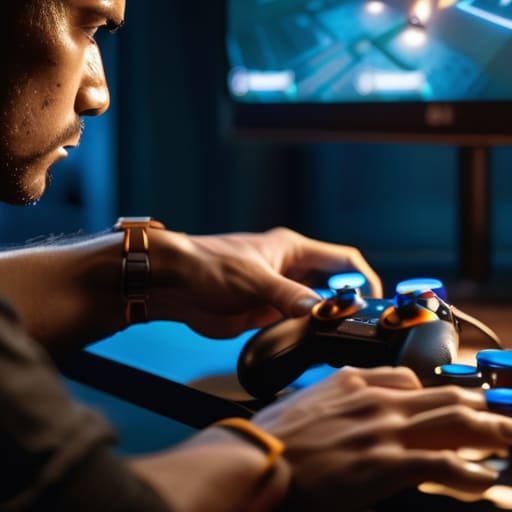
If you’re just standing in the training room hitting a heavy attack over and over, you aren’t practicing; you’re just killing time. To actually see progress, you need to implement specific deliberate practice methods that force you to engage with the game’s mechanics under pressure. Stop trying to play the whole fight. Pick one specific interaction—like a frame-perfect parry or a specific combo finisher—and drill it until the movement feels like a reflex rather than a conscious thought. This is how you build genuine muscle memory development that won’t fail you when your heart rate spikes in a real match.
Once you’ve isolated a mechanic, stop guessing if you’re actually getting better. I spent months thinking I was improving, only to realize I was just getting comfortable with my own mistakes. You need to start analyzing gameplay footage of your failed attempts to see exactly where your timing drifts. Are you reacting to the animation, or are you actually reading the telegraph? If you can’t pinpoint the exact millisecond your input fails, you aren’t training; you’re just hoping for better luck next time.
Muscle Memory Development Without Wasting Your Time

Most people think muscle memory development is just about mashing the same combo five hundred times until their fingers ache. It isn’t. If you’re just repeating a sequence while your brain is on autopilot, you aren’t learning; you’re just reinforcing bad habits. To actually make progress, you need to break the input down. Don’t try to execute the full string immediately. Instead, isolate the specific frame window where the transition happens. If you can’t hit the timing on a single button press ten times in a row without thinking, you have no business trying the full sequence.
True improving performance through repetition requires a high level of mental engagement. I don’t just run the same drill; I vary the conditions. If you’re practicing a parry, don’t just stand there. Force yourself to move or dodge immediately after the successful input. This forces your brain to bridge the gap between the mechanical execution and the actual gameplay flow. If your training feels easy, you’re wasting your time. You should be constantly on the edge of a mistake to ensure the neural pathways are actually being forged.
Stop Mashing and Start Mapping: 5 Ways to Actually Use the Lab
- Isolate the telegraph. Don’t just run at the boss and try to survive; pick one specific animation—the wind-up before a heavy swing or the flash before a projectile—and spend ten minutes doing nothing but reacting to that single frame. If you can’t hit the parry or dodge every single time in a row, you haven’t learned the move yet.
- Set your inputs to ‘Display.’ Most people play with the UI turned off, but if you’re trying to fix a mechanical error, you need to see exactly when your button press registers against the animation. If there’s a three-frame gap between your input and the hit, you’ll see it on the log.
- Use the dummy’s health bar as a timer. Instead of just hitting a training dummy until you’re bored, try to execute a specific combo string within a set number of seconds. If your rhythm is off, the combo will fail. Speed is useless if the sequence isn’t frame-perfect.
- Test your settings, not just your skill. If you feel like you’re overshooting your targets, don’t just “try harder.” Go into the training mode, move your stick or mouse, and check if your sensitivity is actually the culprit. I’ve wasted weeks thinking I was bad when I actually just had a deadzone setting that was fighting me.
- Practice the “failure state.” Most players use training mode to practice what happens when they win. That’s a waste of time. Use it to practice what happens when you miss. If you whiff a dodge, don’t reset; practice the specific recovery movement needed to get back into a neutral stance without getting punished.
The Bottom Line
Stop mashing buttons in training mode to “feel” the rhythm; if you aren’t actively isolating a specific telegraph or a single input sequence, you’re just wasting time you could spend actually playing.
Muscle memory is a lie if you don’t vary the timing; practice the boss’s attack, then practice the exact frame-perfect window you need to dodge it, or you’ll just fail when the pressure hits in a real match.
If a training drill feels like mindless repetition without a goal, scrap it; you need to be deconstructing the pattern, not just rehearsing a loop that won’t hold up when the boss changes its phase.
Stop Mashing, Start Mapping

At the end of the day, training mode isn’t a place to go when you’re bored; it’s a laboratory. If you’re just standing there hitting a heavy attack over and over because it feels good, you’re wasting your time. You need to be deconstructing the frame data, identifying the exact telegraph that precedes the hit, and building a specific response to it. Stop treating practice like a warm-up and start treating it like a diagnostic tool. If you can’t execute a specific combo or dodge a specific pattern ten times in a row without a single mistake, you haven’t learned it yet—you’ve just gotten lucky.
The difference between a player who hits a skill wall and a player who climbs over it is how they spend their downtime. Most people play the game to win; I play the training mode to understand why they lose. It’s not flashy, and it’s definitely not as fun as a high-stakes ranked match, but it is the only way to actually bridge the gap between being “decent” and being a problem for your opponents. Don’t aim for perfection, aim for predictability. Once you can predict the game, the game stops being a wall and starts being a playground.