

I spent three hours last Tuesday staring at a second monitor, scrolling through a wiki page for a level I’d already finished, just to make sure I hadn’t missed a single collectible. It was a waste of time. Most people think you need a 50-page community spreadsheet to beat a game at 100%, but that’s just how you kill the actual experience. If you’re constantly alt-tabbing to check a map, you aren’t playing the game; you’re just checking boxes. I’m tired of seeing players lose the thread of a world because they’re too busy reading someone else’s notes on how to find secrets without a wiki.
I’m not here to give you vague “use your intuition” nonsense that sounds like it came from a marketing brochure. I’m going to show you the actual mechanical tells—the way light hits a specific texture, the slight stutter in a character’s pathing, or how level geometry breaks when a developer is trying to hide something. I’ll give you the specific visual cues that actually matter so you can stop reading and start seeing the game for what it really is.
Table of Contents
Mastering Pattern Recognition in Exploration

Stop looking for glowing icons. Most devs aren’t that lazy, and if they are, you’re missing the actual design. Real discovery comes down to pattern recognition in exploration. If you notice that every time a hallway turns a specific shade of mossy green there’s a breakable wall, or if a certain type of floor tile always feels slightly more “hollow” when you walk over it, you’ve found the rhythm. You aren’t guessing; you’re reading the math the developers used to build the level.
It’s about using deductive reasoning for discovery rather than just running into every wall like a headless chicken. If a corpse is positioned facing a specific, unremarkable statue, that isn’t just flavor text—it’s a breadcrumb. I spent way too many hours in my first Souls-like trying to find loot by brute force before I realized that the lighting isn’t just there to look pretty; it’s a directional guide. If the light hits a specific corner at an unnatural angle, there is almost certainly a way to get there. Stop clicking everything and start watching how the world actually behaves.
Using Deductive Reasoning for Discovery
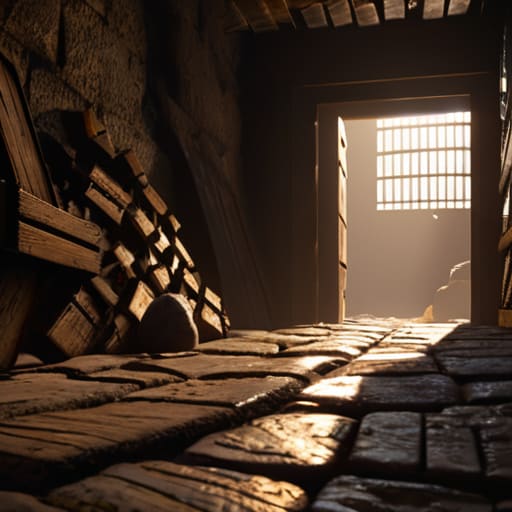
Stop treating every corner of the map like a random asset dump. If a developer spent time modeling a specific, slightly-too-large alcove or a strangely lit corridor, they didn’t do it for the aesthetic alone. You need to start using deductive reasoning for discovery by asking why a specific asset exists in that exact spot. If there’s a pile of debris blocking a path that looks like it should be clear, or a single flickering light in a room full of darkness, that’s not “atmosphere”—it’s a breadcrumb.
Most players fail because they’re looking for a glowing icon, but real discovery comes from uncovering hidden game mechanics through trial and error. If a door doesn’t have a key, look at the floor. If the texture changes from stone to dirt near a wall, there’s a high probability that wall is a fake. Don’t wait for a prompt to tell you that you’ve found something. If the world feels like it’s nudging you toward a specific direction, trust the geometry, not the mini-map.
Five ways to stop being a tourist and start actually seeing the level
- Follow the lighting. If a developer spent three hours baking lightmaps for a specific corner or placed a single, flickering torch in a dead-end hallway, they aren’t doing it for “atmosphere”—they’re pointing at a loot chest or a fake wall.
- Watch the geometry for inconsistencies. I don’t mean “look for cracks”; I mean look for where the texture tiling breaks or where a wall sits three centimeters deeper than the rest of the room. If the line isn’t straight, it’s probably a door.
- Use your movement as a probe. Don’t just walk; strafe against every corner and jump into every alcove. If your hitbox clips through a surface that looks solid, you’ve found a seam.
- Listen for the audio tells. Most modern engines use specific sound triggers for hollow spaces. If your footsteps change from a heavy thud to a slight echo while you’re still on what looks like solid stone, stop walking and start digging.
- Ignore the “intended” path. Developers design routes to funnel you toward the objective, but they almost always leave a way to bypass the bottleneck. If a ledge looks slightly too high to reach normally, check your jump height or look for a way to manipulate the environment to get there.
The Bottom Line
Stop looking for icons and start looking for geometry; if a wall looks slightly different or a ledge seems out of place, it’s usually there for a reason.
Use the game’s own logic against it—if the developers put a specific light source or a unique texture in a room, they’re flagging something worth your time.
Trust your eyes over a wiki; if a path feels like it’s leading somewhere but the map says otherwise, follow the path, not the HUD.
Stop Outsourcing Your Brain

Look, the takeaway is simple: stop treating a game like a checklist and start treating it like a piece of architecture. If you stop scrolling through a wiki every time you hit a dead end and instead start looking for the intentional inconsistencies in the level design—the lighting shifts, the way the geometry breaks, or the subtle audio cues—you’ll find more than just loot. You’ll find the actual logic the developers used to build the world. Once you start applying deductive reasoning to the environment instead of just hunting for icons on a map, the game stops being a series of tasks and starts being a puzzle you actually know how to solve.
At the end of the day, the reason we play these games isn’t to tick boxes on a completionist spreadsheet; it’s for that specific hit of dopamine when you stumble onto something that felt impossible to find. When you rely on a guide, you’re just following a script, and that’s a fast way to burn out on a title. Put the phone down, close the browser tab, and actually look at the screen. The secret is almost always right in front of you, hidden in plain sight by a developer who is smarter than you think. Go find it.