

Stop wasting your time with “holistic evaluation frameworks” and expensive scouting software that does nothing but add layers of bureaucratic noise. Most people think they know how to hold a tryout fairly, but they’re usually just picking the players who play the loudest or look the most like their own previous roster. I’ve seen countless talented players get benched because a coach relied on “vibes” instead of actual, measurable data, and frankly, it’s exhausting to watch. If your selection process is just a popularity contest wrapped in professional-sounding jargon, you aren’t finding talent; you’re just reinforcing your own biases.
I’m not here to give you a lecture on organizational theory or a list of vague “soft skills” to look for. I’m going to show you the actual, granular metrics that matter—the kind of specific, repeatable data points that separate a high-ceiling prospect from a player who just knows how to perform for an audience. We are going to strip away the hype and focus on objective performance indicators and how to build a system where the numbers actually speak. This is about creating a process that is actually learnable and transparent, so the best players make the cut every single time.
Table of Contents
Standardized Scoring Systems Over Vague Gut Feelings
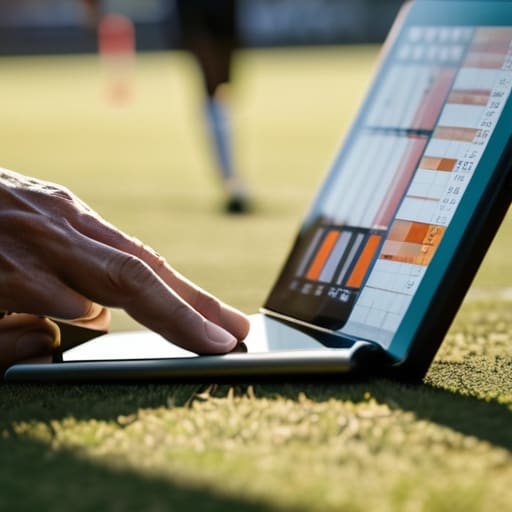
If you’re picking players based on “vibes” or who looks the most like a pro during a warmup, you aren’t running a tryout; you’re running a popularity contest. I’ve seen too many squads blow their season because a coach liked a player’s personality more than their actual utility. To actually fix this, you need standardized scoring systems. Stop asking “did they look good?” and start asking “did they hit the target 8/10 times under pressure?”
Vague gut feelings are just a mask for unconscious bias. When you rely on intuition, you aren’t assessing skill; you’re just confirming your own prejudices. You need to implement objective evaluation metrics that stay the same from the first minute to the last. If one player is being judged on reaction time and another on communication, your data is garbage. Define your KPIs—whether it’s K/D, objective time, or specific mechanical triggers—and stick to them. If the numbers don’t back up the “feeling,” the feeling is wrong. Period.
Eliminating Bias in Selection Before It Ruins the Team

If you walk into a tryout and your only metric is “vibes,” you’ve already failed. I’ve seen too many teams pass over actual talent because a player didn’t fit the existing social circle or had a “personality” that didn’t match the coach’s mood that day. That’s not scouting; it’s nepotism disguised as intuition. To actually succeed, you need eliminating bias in selection to be a hard rule, not a suggestion. This means stripping away the subjective noise and looking at the raw data of what the player actually does when the pressure is on.
You can’t fix what you don’t measure. If you aren’t using objective evaluation metrics—like specific reaction times, positioning accuracy, or success rates in high-stress scenarios—you’re just guessing. A transparent recruitment process means every player is measured against the same yardstick, regardless of whether they’re your friend or a complete stranger. If your assessment process relies on a coach’s “gut feeling,” you aren’t building a team; you’re just building an echo chamber that will crumble the moment you hit a real wall.
Stop Guessing: 5 Ways to Actually Measure Skill Without the Fluff
- Define the win condition before the first player spawns. If you don’t know if you’re looking for raw mechanical aim or high-IQ positioning, you’re just watching people play games. Write down the exact metrics—APM, accuracy under pressure, or objective time—so you aren’t making decisions based on who “looked cool” in a highlight reel.
- Use a fixed rotation for drills. If you test Player A on a high-latency server or a map they’ve mastered, and Player B on a fresh map with a lag spike, your data is garbage. Every single person needs the exact same environment, the same settings, and the same difficulty spike.
- Separate mechanics from communication. I’ve seen too many tryouts where a loud, confident player gets picked over a silent god because they “sounded like a leader.” Run a mechanical test in silence first, then run a team comms test. Don’t let a loud mouth mask a lack of fundamental skill.
- Record the sessions. Your memory is a liar. You’ll swear you saw a player miss a crucial shot, but when you go back to the VOD, they actually hit it and were just outplayed. If you aren’t reviewing the footage against your scoring sheet, you’re just playing favorites with your own bad memory.
- Kill the “Vibe Check.” If your selection criteria includes “they seem like a good fit for the group,” you’ve already failed. That’s just code for hiring people who are exactly like you. If it isn’t a measurable skill or a specific, documented soft skill, it shouldn’t be part of the scorecard.
The Bottom Line
Stop relying on “vibes.” If you can’t point to a specific metric or a recorded timestamp to justify why a player made the cut, you aren’t running a tryout; you’re just picking favorites.
Standardize the variables. Everyone needs the same equipment, the same map, and the same conditions, or your data is garbage and your results are meaningless.
Document everything as it happens. A spreadsheet with raw numbers is worth more than a hundred “gut feelings” whispered in a Discord call after the session ends.
Stop Guessing and Start Measuring

Look, if you’re still relying on “vibes” or that weird feeling in your gut to pick your roster, you’ve already lost. A fair tryout isn’t about being nice to everyone; it’s about replacing ambiguity with hard data. You need standardized scoring so you aren’t comparing a mechanical god to a shot-caller using two different yardsticks, and you need to strip out the bias before it turns your team into a clique. If your metrics are broken, your selection process is just a glorified popularity contest that ignores the actual talent sitting right in front of you.
At the end of the day, players don’t want your sympathy; they want a fair shot at the seat. They want to know that if they put in the hours and hit the precise timings, the system will actually recognize it. Building a transparent, data-driven tryout is a massive headache, but it’s the only way to ensure you aren’t building a house on sand. Stop chasing the hype of a “star player” and start looking for the actual value your metrics reveal. That’s how you build a winning roster that actually lasts.