

Stop listening to the “immersion” crowd telling you that you need to crawl through literal filth for twenty minutes just to feel the tension. Most tutorials make it sound like a high-stakes chess match, but half the time, you’re just fighting against broken detection meters and predictable AI that feels like it’s reading your input buffer. I spent three months of my life stuck on a single corridor in a tactical shooter because I was following “pro” advice about staying in the shadows, only to realize the game didn’t actually care about light levels—it cared about line of sight vectors. If you don’t understand how to approach a stealth section by looking at the actual geometry instead of the lighting engine, you’re just wasting your time.
I’m not here to give you a philosophical lecture on tension or cinematic pacing. I’m going to show you the mechanical reality of these encounters. We’re going to break down patrol timing, how to exploit collision boxes to break sightlines, and how to stop reacting to alarms after they’ve already gone off. This isn’t about being a ghost; it’s about reading the math behind the guard’s vision cone so you can move without hitting a wall.
Table of Contents
Timing Patrol Patterns Before You Hit the Wall

Most players fail stealth sections because they treat guard movement like a random obstacle course rather than a predictable loop. If you’re just sprinting from cover to cover hoping you don’t get spotted, you’re doing it wrong. You need to stop treating the environment like a series of hiding spots and start treating it like a clock. I spent way too many hours in Shadow Protocol getting caught because I thought I had a three-second window when I actually had two. Timing patrol patterns isn’t about luck; it’s about identifying the exact second a guard turns their back to reach a waypoint.
Once you find that rhythm, stop moving. Most of the “difficulty” in these levels is actually just the game punishing your impatience. If you can’t predict where a guard will be in ten seconds, you haven’t watched them long enough. Effective line of sight management means knowing exactly which corner will clip your hitbox if you move too early. Don’t rely on environmental distraction techniques to bail you out of bad positioning—use them to create the gap you actually need to execute a clean run.
Mastering Line of Sight Management to Stay Invisible
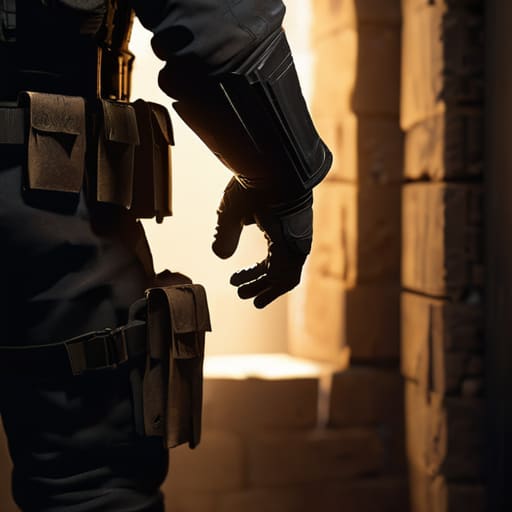
Stop treating line of sight like a binary switch that only flips when you’re standing directly in a guard’s face. Most games use a cone of vision that is much more forgiving—and much more punishing—than you think. If you’re hugging a wall but your shoulder is poking out into their peripheral view, you’re going to get caught. Effective line of sight management isn’t about being invisible; it’s about making sure your hitbox stays behind the geometry that breaks their vision check. I’ve wasted way too many runs because I thought a crate provided full cover when it actually only obscured my legs.
If you can’t find a permanent hiding spot, you need to stop relying on luck and start using environmental distraction techniques to manipulate where they look. Throw a bottle, trigger a noise maker, or just wait for the moment they turn their back to check a doorway. Don’t just crouch-walk blindly; if you don’t know exactly where their eyes are tracking, you’re just waiting to fail. It’s about avoiding enemy detection by controlling the geometry of the room, not just praying the AI doesn’t glitch out.
Five Things Most Guides Forget to Tell You
- Stop treating the “crouch” button like a magic invisibility cloak. In most modern stealth titles, crouching only shrinks your hitbox; it doesn’t erase your presence if you’re moving through a light source or walking directly into an NPC’s peripheral vision. If you aren’t checking the lighting, you’re just a slow-moving target.
- Audio is a mechanic, not an aesthetic. If you’re playing with headphones, you should be able to tell exactly how many meters away a guard is based on the footstep cadence. If you’re running on metal grates or gravel, you’re basically ringing a dinner bell. Stop sprinting unless you’ve already broken line of sight.
- Learn the “reset” point. Every stealth encounter has a specific spot where the AI’s detection meter resets or where they return to their default loop. Find that spot early. If you get spotted, don’t just panic-run; find the reset point or you’ll spend the next ten minutes playing a frantic, losing game of tag.
- Don’t ignore the environment’s verticality. Most players focus on the floor, but if a game has ledges, crates, or rafters, that’s where the actual path of least resistance is. If the ground level is a crowded mess of patrol paths, look up. The AI pathing is almost always predictable on the ground, but they rarely check the ceiling.
- Check your UI for “detection decay.” Some games have a meter that drops instantly when you hide, others have a lingering “suspicion” phase where guards will linger near your last known position. If you hide the second you’re spotted but don’t actually move to a new quadrant, they’re going to find you every single time.
The Bottom Line
Stop guessing when a guard turns; if you haven’t mapped the loop after two failures, you’re just playing a guessing game, not a stealth game.
Stop relying on “cover” that doesn’t actually break line of sight; if there’s a gap between your head and the ledge, the AI’s detection meter is already filling.
Ignore the “easy mode” settings that automate detection; they don’t teach you the rhythm, they just mask the fact that you haven’t learned the patrol timing yet.
Stop Guessing and Start Watching

Look, stealth isn’t about having lightning reflexes or some magical luck; it’s about the data you collect before you even move. If you’ve spent the last ten minutes running into guards because you didn’t bother to time the patrol loops, you’re just playing a bad version of the game. You need to treat every corridor like a math problem: map the timing, respect the line of sight, and never move unless you have a confirmed exit point. Stop treating every failed run like a fluke and start seeing it as a failure to read the environment properly. Once you stop guessing where the vision cones end, the frustration stops.
At the end of the day, a well-designed stealth section shouldn’t feel like a wall designed to keep you out; it should feel like a puzzle waiting for you to solve it. If you find yourself stuck, it’s rarely because the game is unfair—it’s usually because you haven’t actually learned the pattern yet. Take a breath, stop the mindless sprinting, and watch the loop one more time. The moment you stop fighting the mechanics and start exploiting the logic, the game stops being a chore and starts being something you actually master. Now go back in and do it right.